
CICS 09
Creating prototype for local food value chain and operational solution for intercropping
Topic
Multifunctional farming
Country
Serbia
Responsible
UNSFA
Objectives
- To create and demonstrate a prototype for a local intercropping-based food value chain
- Testing and validating winter wheat–field pea intercropping under real organic farming conditions and reduced dependence on external inputs
- Facilitate farmer engagement, joint learning, and acceptance of intercropping practices through continuous cooperation, knowledge exchange, and demonstration
- To identify opportunities and barriers for the wider adoption of intercropping, integrating agronomic, economic, social, and market perspectives
Click here if you want to read the project flyer in Serbian
What is this CICS about
The Serbian CICS #9 focused on moving intercropping from field trials towards farmer adoption, food product development and the creation of a potential local value chain. It explored winter wheat–field pea intercropping under organic farming conditions, bringing together researchers, students, an organic farmer and other stakeholders involved in agricultural production, processing and knowledge exchange.
A key element was the ongoing collaboration with the farmer. Regular discussions and the sharing of agronomic results helped build confidence in the system, particularly its potential to improve nitrogen availability in organic farming. The farmer’s willingness to continue experimenting with intercropping highlighted the practical value of this collaboration.
The initiative also extended beyond field trials, producing around 600 promotional pasta packages to demonstrate how intercropping can be linked to food processing, communication and local value-chain development.
Learnings
The introduction of intercropping is not merely a technical or agronomic process. Successful adoption requires time, cooperation, trust-building and practical demonstrations. Farmers are more likely to embrace new practices when they can observe their benefits under real farming conditions, supported by continuous communication and the sharing of results.
Intercropping benefits should be assessed beyond yield and financial performance. Its potential to improve nitrogen availability and reduce dependence on external inputs can encourage adoption, although market opportunities, subsidies and institutional support remain essential for wider implementation.
The multi-actor and interdisciplinary approach, combining research, farmers’ experience and stakeholder participation, helped identify key challenges and opportunities. Finally, developing a tangible product, such as the pasta produced through the CICS, proved valuable in making intercropping more visible and understandable to farmers, stakeholders and consumers.
Learnings
Contact
Updates from
the CICS 09:
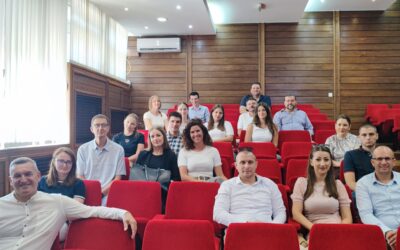
Stakeholder Workshop in Novi Sad: Key Insights, Impact and Future Perspectives
On 25 June 2026, the Faculty of Agriculture, University of Novi Sad, hosted the final stakeholder workshop of the Horizon Europe IntercropVALUES project entitled “Key Insights, Impact and Future Perspectives from the IntercropVALUES Project (2022–2026).” The event...
From barriers to identifying solutions: IntercropVALUES moves forward to promote intercropping
Intercropping, an agricultural practice that could help counterbalance the negative effects of agricultural specialisation by re-introducing crop diversity in fields, is currently facing strong resistance in Europe. Indeed, current European agricultural systems are...
Check out the other 13 Co-innovation
Case Studies (CICS)
CICS 01 denmark
From Field to Flour: Wheat–Pea Intercropping Without Full Separation
CICS 02 sweden
LoBa – Local legumes, collaboration in
the entire value chain
CICS 03 uk
Or-Ganic / SCOCAN (SCottish Organic
CANola)
CICS 04 france
Supporting the integration of diverse intercropping systems into value chains in the South-West of France
CICS 05 germany
New product development including technology and adjustments/redefining regulations
CICS 06 greece
Intercropping for sustainable production of wheat and barley
CICS 07 reunion
New proven crop management strategies using service plants between the sugarcane rows
CICS 08 spain
Specific labelling to agri-food industry. Collective IPM actions and strategies
CICS 09 serbia
Creating prototype for local food value chain and operational solution for intercropping
CICS 10 france (west)
Local/regional values chains, up to national to bring out other groups in FNCUMA network
CICS 11 italy
Understanding and using the benefits of IC in complex farming systems and short value chains
CICS 12 mozambique
Promoting sustainable intercropping systems for agri-food value chain in Mozambique
CICS 13 switzerland
Enhancing food quality and developing value chains through organic wheat-faba bean intercropping
