
CICS 01
From Field to Flour: Wheat–Pea Intercropping Without Full Separation
Exploring how wheat and peas can be grown, harvested and processed together to create a commercially viable food value chain
Topic
Public driver
Country
Denmark
Responsible
BLF – Business Lolland-Falster
Objectives
The Danish InterCropValues case explores whether wheat and peas can be intercropped in a way that creates value throughout the entire chain – from field to food.
A key objective is to investigate whether the traditional and potentially costly step of fully separating the two crops after harvest can be reduced or even avoided.
The case therefore connects three questions:
- Can wheat and peas support each other agronomically in the field?
- Can the two crops be sown and harvested efficiently together?
- Can the harvested mixture be used directly for food if a controlled proportion of peas is accepted in the wheat fraction?
The ambition is to identify a cropping and value-chain model that combines efficient land use, reduced dependence on synthetic nitrogen fertiliser, lower post-harvest processing costs and increased use of plant protein in food.

Click here if you want to read the project flyer in Danish
What is this CICS about?
The Danish case explores how wheat and peas can be intercropped, harvested and processed together, reducing the need for costly post-harvest separation.
Rather than aiming for 100% crop purity, the approach investigates whether a controlled proportion of peas (around 10–15%) can be incorporated into wheat-based food products without compromising quality or consumer acceptance.
Bread trials showed that heat-treating pea flour before mixing it into the dough improved texture, structure and flavour, making it a promising ingredient for more sustainable food production.
Learnings
- Design the crop around the final product: The optimal intercropping ratio should consider both field performance and the composition required by food producers.
- Perfect separation is not always necessary: Allowing a controlled amount of peas in wheat-based products could reduce post-harvest processing costs.
- Processing makes a difference: Heat-treating pea flour improves bread quality and expands the possibilities for using intercropped crops.
- Consider the whole value chain: Harvesting, drying and storing mixed crops safely remains essential to making this approach commercially viable.
Results
The Danish case has delivered several promising results:
- Agronomic potential: Previous field trials achieved a combined Land Equivalent Ratio (LER) of 1.26 for wheat–pea intercropping, indicating more efficient land use than growing the crops separately.
- Promising food applications: Bread trials identified 10–15% pea flour as a suitable inclusion range, particularly when the flour was pre-treated with hot water.
- Improved nutritional value: Incorporating pea flour increased bread protein content by approximately 10.5%.
- Positive sensory results: Bread containing 15% heat-treated pea flour achieved the highest score in blind testing (19.08 out of 25).
- Further applications: Tests also showed promising results in cakes, where pea flour improved perceived quality and was subsequently adopted as a standard ingredient by Fælleskøkkenet.
The next step is to validate the approach at field and value-chain scale, particularly regarding harvesting, drying, storage and combined milling.
Contact: Claus Madelung
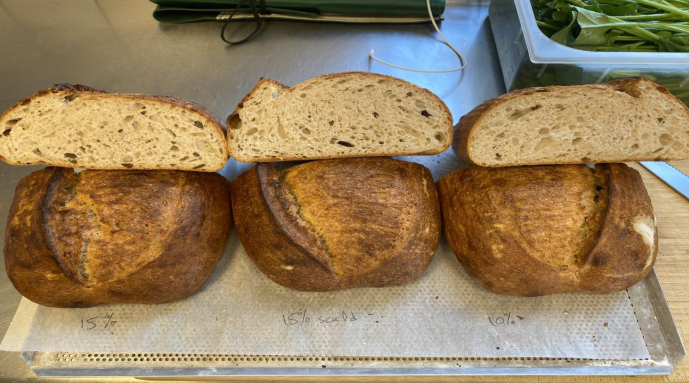
Different shares of pea flour (Harlo Meyer)
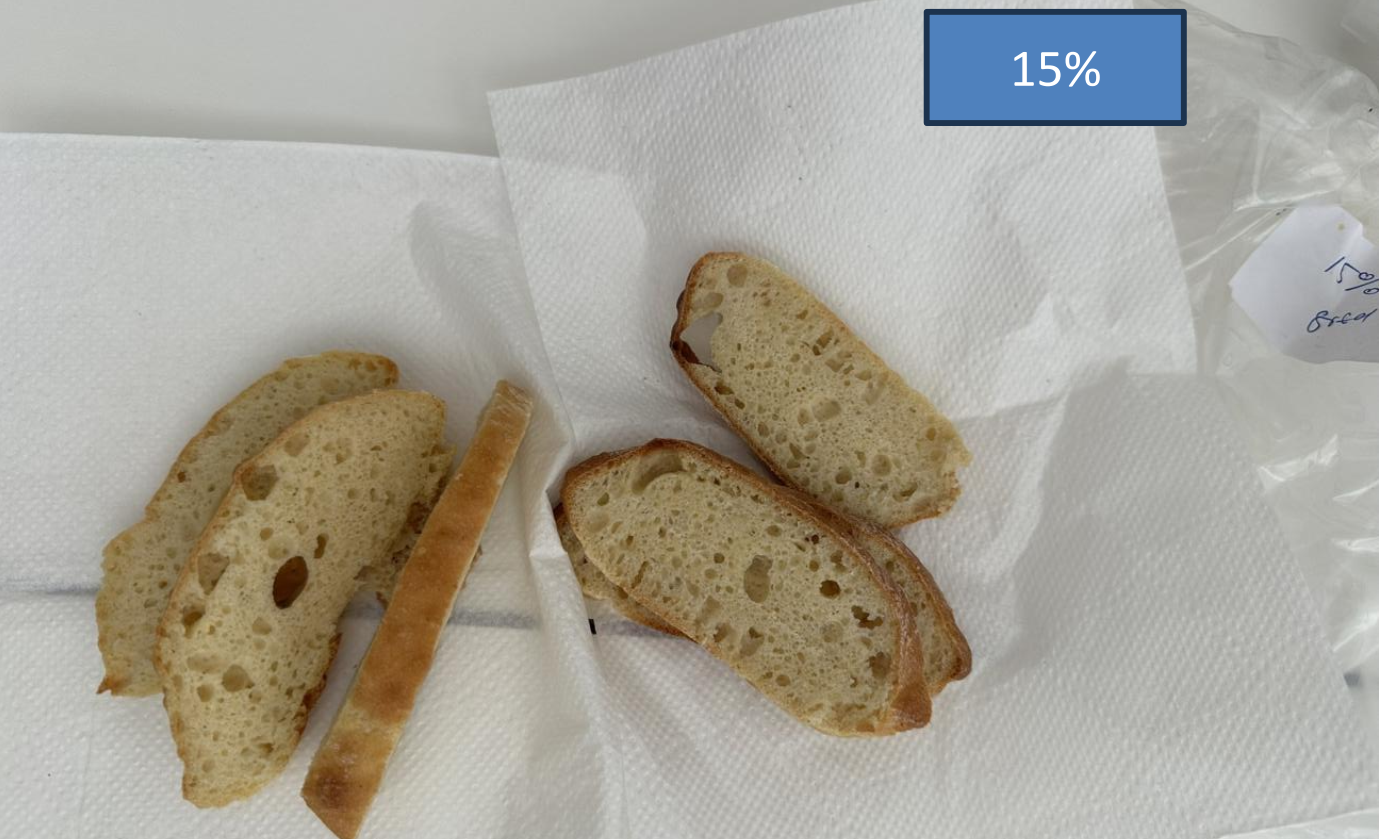
Various shares of pea flour (FællesKøkkenet)
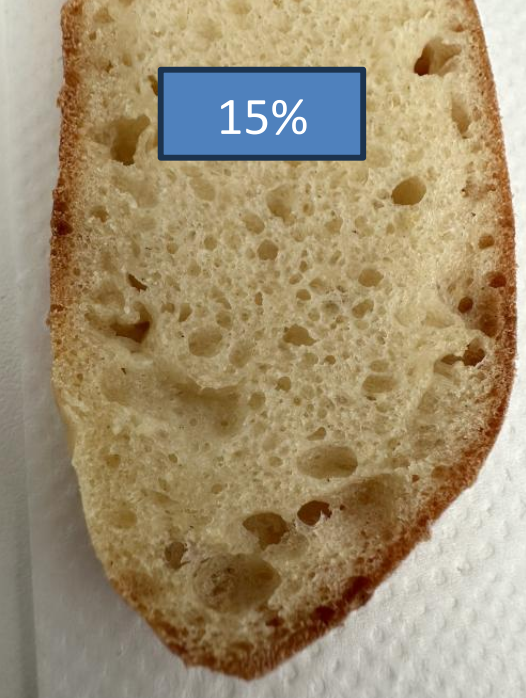
Various shares of pea flour (FællesKøkkenet)
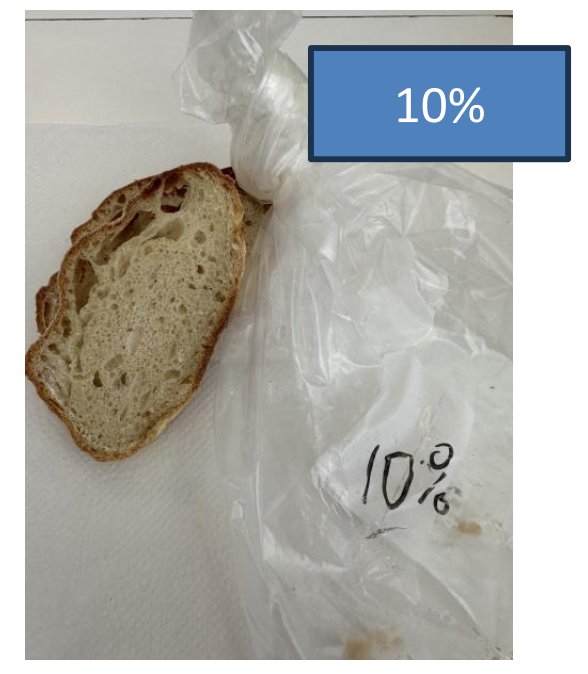
Various shares of pea flour (FællesKøkkenet)
Updates from
the CICS 01:

From barriers to identifying solutions: IntercropVALUES moves forward to promote intercropping
Intercropping, an agricultural practice that could help counterbalance the negative effects of agricultural specialisation by re-introducing crop diversity in fields, is currently facing strong resistance in Europe. Indeed, current European agricultural systems are...

Lock-ins in Denmark are a barrier to intercropping practices and food system innovation
By Emilie Hansted Berning, Pernille Aavild Juhl, Ane Kirstine Aare and Henrik Hauggaard-Nielsen, Department of People and Technology, Roskilde University (RUC). Denmark’s export-oriented agricultural sector, driven by strategies to maximize production per input unit...
Check out the other 13 Co-innovation
Case Studies (CICS)
CICS 01 denmark
New business opportunities along local food value chains – including educational aspects
CICS 02 sweden
Increased market demand for locally produces, value addition, unlocking from local to national
CICS 03 uk
New and high value product development requiring technical quality adjustments
CICS 04 france
Develop mixtures of species for food innovations adapted to original low productivity contexts
CICS 05 germany
New product development including technology and adjustments/redefining regulations
CICS 06 greece
New sustainable products for local markets including new machineries and adaptation
CICS 07 reunion
New proven crop management strategies using service plants between the sugarcane rows
CICS 08 spain
Specific labelling to agri-food industry. Collective IPM actions and strategies
CICS 09 serbia
Added final product value with prototypes and operational solutions
CICS 10 france (west)
Local/regional values chains, up to national to bring out other groups in FNCUMA network
CICS 11 italy
Environmental service clarifications including technical equipment optimization and investment
CICS 12 mozambique
"Global south" model building with the transition from subsistence to commercial family farming
CICS 13 switzerland
Each value chain actor needs to experience benefit from intercropping strategies
