
CICS 11
Understanding and using the benefits of IC in complex farming systems and short value chains
Topic
Ecosystem functions
Country
Italy
Responsible
RSR – Rete Semi Rurali
Objectives
- Investigate the factors that make IC adoption easier on some farms compared to others.
- Assess the obstacles and critical bottlenecks to IC uptake, and identify potential solutions.
- Identify the key drivers and advantages encouraging farmers to adopt IC.
- Analyse the value chains established by the CICS farms.
- Support knowledge sharing, capacity building, peer-to-peer learning, and citizen awareness-raising.
Do you want to read the project flyer in Italian? Click here
What is this CICS about
The Italian CICS #11 brings together six organic farms with experience in intercropping, agroecological practices, short or closed value chains, and collaborative networks and research projects.
Two livestock farms in the Po Valley grow sorghum and cowpea for silage, Italian ryegrass and clover for hay, and barley and pea for milling, aiming to produce nutritionally balanced animal feed. Two arable farms cultivate cereals intercropped with legumes, including wheat with clover, oats with clover mixtures, and durum wheat with Italian sainfoin. These combinations help suppress weeds, improve soil fertility and moisture retention, and provide earlier forage.
The other two arable farms focus on grain intercrops for human consumption, combining cereals and legumes in autumn- and spring-sown systems. Examples include wheat with pea, durum wheat with chickpea, einkorn with lentil, and millet with cowpea, flax or buckwheat. These systems also support crop diversification and, in some cases, higher yields.
To address barriers to adoption, the CICS mapped existing farming practices and promoted knowledge exchange through training, demonstration plots, farm visits, webinars and educational materials. It also worked to reduce bureaucratic obstacles by proposing the inclusion of intercropping in official farm management records, while raising consumer awareness through open days and social media. Finally, product innovation was encouraged through baking trials and new biscuit recipes, with products assessed by farmers, bakers and citizens.
Learnings
The following factors explain why intercropping (IC) is more readily adopted on some farms than on others:
- Agroecological farm management: all farms belonging to the Italian CICS are organically certified and adopt agroecological approaches to farm management. This reflects their strong commitment to maintaining high levels of biodiversity complexity. Although intercropping entails higher production costs, these are offset by savings from reduced external input purchases, the reuse of farm-saved seed, and the long-term benefits of improved soil fertility, water management and the overall equilibrium toward which the agroecosystem naturally tends.
- Openness to empirical field experimentation: the relatively small scale of the farms, combined with greater flexibility and autonomy in decision-making, has allowed farmers, technical advisors, and contractors to accumulate valuable practical expertise over time.
- Investment in cleaning and processing facilities: two arable farms within the CICS have invested in seed-cleaning machinery to separate the grains, thereby gaining independence from external processing and enabling them to handle small batches according to more convenient timelines. These facilities – which also include a small mill and a packaging machine –provide services to small organic farms in the surrounding area.
- Short supply chains: products from IC are marketed through farm shops, specialized retailers, and e-commerce platforms via the farms’ own websites. This allows for direct engagement with consumers, who – being well informed – are willing to accept low impurities in the grain mixtures, to experiment with new products, and to pay a fair price for them.
- Commitment to public outreach and collaboration with networks: the Italian CICS farms are proactive communicators, capable of building networks with other farmers and raising citizens’ awareness through social media and open-field events. This helps to explain the value of intercropping and to successfully enhance the market appeal of the final products.
Contact
Updates from
the CICS 11:
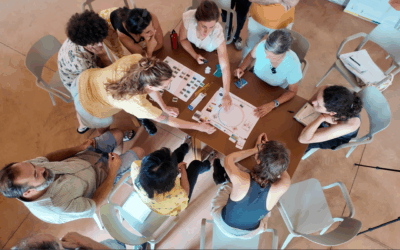
Interplay: User Experiences and Implementation Insights in Italy
Interplay is a game designed to develop the skills of adults, with a focus on plant intercropping in agriculture. Developed as part of the Remix project (Horizon 2020), it combines card and board elements with a verification mechanism based on digital modelling. As...
From barriers to identifying solutions: IntercropVALUES moves forward to promote intercropping
Intercropping, an agricultural practice that could help counterbalance the negative effects of agricultural specialisation by re-introducing crop diversity in fields, is currently facing strong resistance in Europe. Indeed, current European agricultural systems are...
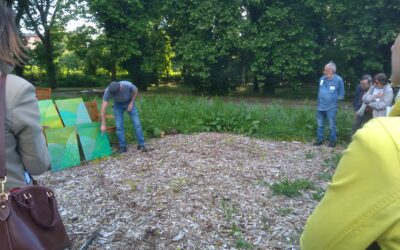
Citizens discover intercropping at the Municipal Botanical Museum in Milan (Italy)
In the framework of its activities addressed to citizens, last May 17 the Municipal Botanical Museum ‘Aurelia Josz’ in Milan organized a free visit to its garden. On the occasion, the Museum curators invited CREA’s researchers Daniele Cavalli and Luciano Pecetti–who...

Learning from the experience of seven organic farms practicing intercropping in Italy
Intercropping can offer many potential advantages over single stand cropping systems when applied in organic farming: it optimizes the management of resources, increases agricultural biodiversity, allows better weed control, preserves the fertility of the soil and...

Stimulating the growth of the organic sector by developing intercropping practices
The 17th edition of the European Organic Congress, organized by IFOAM Organics Europe and Ecovalia, is currently taking place in Cordoba, Spain. On the picture above, Eduardo Cuoco (IFOAM Organics Europe) presents during the European Organic Congress 1st session on...

A summer to learn about intercropping
A summer to learn about intercropping Summer is starting and it is time to rest. The IntercropVALUES project started in November and the official kick-off took place at the end of that month, when all partners met in Montpellier to launch the activities and establish...
Check out the other 13 Co-innovation
Case Studies (CICS)
CICS 01 denmark
From Field to Flour: Wheat–Pea Intercropping Without Full Separation
CICS 02 sweden
LoBa – Local legumes, collaboration in
the entire value chain
CICS 03 uk
Or-Ganic / SCOCAN (SCottish Organic
CANola)
CICS 04 france
Supporting the integration of diverse intercropping systems into value chains in the South-West of France
CICS 05 germany
New product development including technology and adjustments/redefining regulations
CICS 06 greece
Intercropping for sustainable production of wheat and barley
CICS 07 reunion
New proven crop management strategies using service plants between the sugarcane rows
CICS 08 spain
Specific labelling to agri-food industry. Collective IPM actions and strategies
CICS 09 serbia
Creating prototype for local food value chain and operational solution for intercropping
CICS 10 france (west)
Local/regional values chains, up to national to bring out other groups in FNCUMA network
CICS 11 italy
Understanding and using the benefits of IC in complex farming systems and short value chains
CICS 12 mozambique
Promoting sustainable intercropping systems for agri-food value chain in Mozambique
CICS 13 switzerland
Enhancing food quality and developing value chains through organic wheat-faba bean intercropping
