
CICS 07
New proven crop management
strategies using service plants between
the sugarcane rows
Topic
Sugarcane value
Country
France
Responsible
(La Réunion Island)
Objective
Co-designing sugarcane for cover crop systems on-farm based on data acquired by research and by identifying the technical and economic levers and obstacles that the farmer will face in practice
The main stakeholders involved are farmers, agricultural technicians (Tereos & Chambre d’Agriculture), and Research & Development institutes (eRcane, Cirad)
Click here if you want to read the project flyer in French
What is the CICS about
The CICS was part of the Agricultural Innovation and Technology Transfer Network (RITA-Canne) on Réunion Island, which brings together all stakeholders in the sugarcane sector (technical institutes, research organizations, farmers, and other stakeholders). More specifically, it has sought to support a small group of farmers in establishing and monitoring intercropping plots on their farms to assess the practical feasibility of these herbicide-reducing systems. The systems under study were combinations of sugarcane and cover crops (primarily legumes) designed to limit weed growth while also offering potential complementary harvest. The choice of species was made by the farmers.
Learnings
Reducing herbicide use alone is not enough to encourage intercropping adoption in the sugarcane sector in La Réunion. A more promising approach is to combine production and services, involving diversified farmers to support wider uptake.
New practices must also improve the economic viability of intercropping, which remains more expensive than conventional farming, while offering benefits that farmers find attractive.
Although farmers have shown clear interest, wider adoption is still constrained by labour shortages, limited mechanisation and the insufficient availability of cover crop seeds, despite the emergence of new suppliers.
Results
Scientific publication Réduire les herbicides en cultures de canne à sucre, à quel prix
Document Des plantes de services pour réduire l’utilisation d’herbicides en canne à sucre
Document Guide pratique de mise en place des plantes de services en canne à sucre
Poster and presentation Les plantes de services pour une gestion complémentaire des adventices
Updates from
the CICS 07:
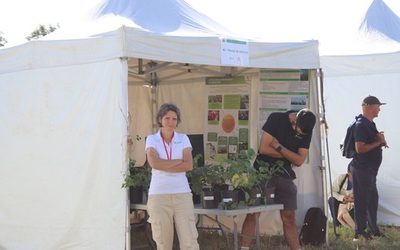
Legumes and sugarcane: exploring new opportunities for intercropping at Agrofert’îles Canne
How can legumes contribute to more diversified and sustainable sugarcane systems? This question was at the heart of IntercropVALUES’ participation in Agrofert’îles Canne, an event that brought together 295 visitors, 108 speakers and 33 exhibitors. The IntercropVALUES...

From barriers to identifying solutions: IntercropVALUES moves forward to promote intercropping
Intercropping, an agricultural practice that could help counterbalance the negative effects of agricultural specialisation by re-introducing crop diversity in fields, is currently facing strong resistance in Europe. Indeed, current European agricultural systems are...

VIDEO RELEASE: Reducing herbicide use by introducing legume intercropping in sugarcane in La Réunion (France)
IntercropVALUES project is present on Reunion Island through the involvement of two partners: eRcane and CIRAD. As part of their participation in the project, and the activities they develop in Co-Innovation Case Study (CICS) 7, they are working with 4 farmers to...

The impact of legumes on weed control in sugarcane: news from Reunion island
As part of the IntercropValues project, eRcane and CIRAD have presented to the French Overseas Agricultural Innovation and Transfer Network (RITA) a summary of the knowledge acquired on sugarcane intercropping systems, at the annual steering committee meeting. This...

eRcane is hiring a project leader in the frame of IntercropVALUES
eRcane is hiring a project leader in the frame of IntercropVALUES As a key player in Réunion's sugarcane industry, the eRcane research centre is helping to increase production, make it more profitable and ensure its long-term viability, by being at the forefront of...
Check out the other 13 Co-innovation
Case Studies (CICS)
CICS 01 denmark
From Field to Flour: Wheat–Pea Intercropping Without Full Separation
CICS 02 sweden
LoBa – Local legumes, collaboration in
the entire value chain
CICS 03 uk
Or-Ganic / SCOCAN (SCottish Organic
CANola)
CICS 04 france
Supporting the integration of diverse intercropping systems into value chains in the South-West of France
CICS 05 germany
New product development including technology and adjustments/redefining regulations
CICS 06 greece
Intercropping for sustainable production of wheat and barley
CICS 07 reunion
New proven crop management strategies using service plants between the sugarcane rows
CICS 08 spain
Specific labelling to agri-food industry. Collective IPM actions and strategies
CICS 09 serbia
Creating prototype for local food value chain and operational solution for intercropping
CICS 10 france (west)
Local/regional values chains, up to national to bring out other groups in FNCUMA network
CICS 11 italy
Understanding and using the benefits of IC in complex farming systems and short value chains
CICS 12 mozambique
Promoting sustainable intercropping systems for agri-food value chain in Mozambique
CICS 13 switzerland
Enhancing food quality and developing value chains through organic wheat-faba bean intercropping
