
CICS 03
Or-Ganic / SCOCAN
(SCottish Organic CANola)
Topic
High-end products
Country
United Kingdom
Responsible
SAOS
Scottish Agricultural Organisation Society Ltd.
Objective
To develop a sustainable, profitable and resilient premium organic rapeseed oil supply chain.
- To build knowledge, confidence and commitment to intercropping across the supply chain.
- To develop and demonstrate a practical blueprint for the successful production of organic OSR using intercropping systems.
- To increase the number of growers adopting intercropping and expand the annual production of organic OSR.
- To stimulate consumer demand and strengthen the market for premium organic rapeseed oil.
Click here if you want to read the project flyer in English
What is this CICS about
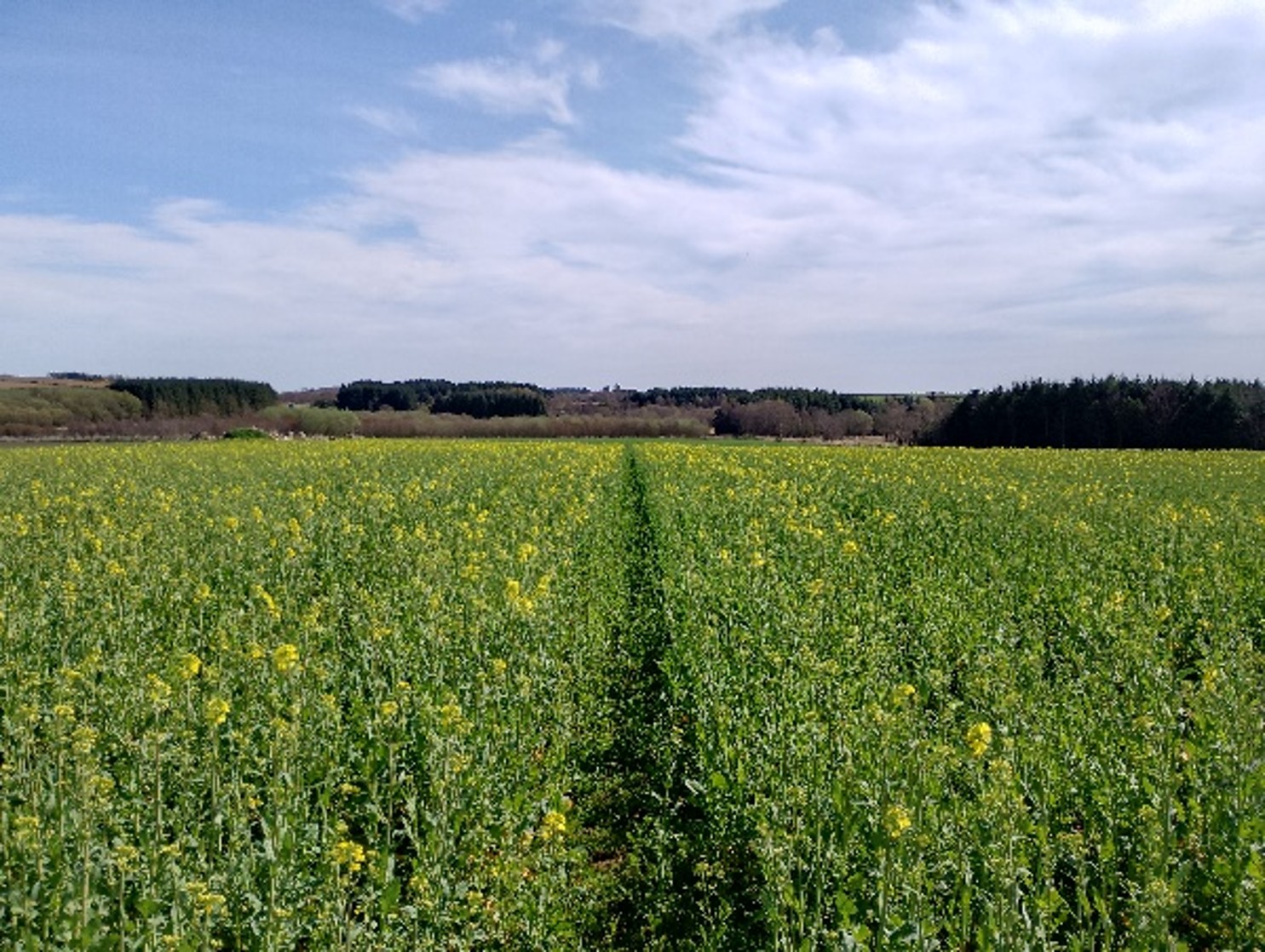
To establish a collaborative supply chain for organic oilseed rape that delivers fair and sustainable financial returns for all participants while at the same time improving the environmental sustainability and resilience of organic OSR production through encouraging the adoption of intercropping systems.
Learnings
Organic rapeseed yields were highly variable, with frequent crop failures reducing farmers’ confidence and leading some to stop production. Nevertheless, the CICS identified several agronomic recommendations:
- Crop establishment: Grow rapeseed after grass-clover, use farmyard manure, choose vigorous and resistant varieties, and sow early (e.g. early August in Scotland).
- Crop management: Slug pellets may help; swathing before combining is preferred, and careful drying (around 9% moisture content) and seed sorting are important.
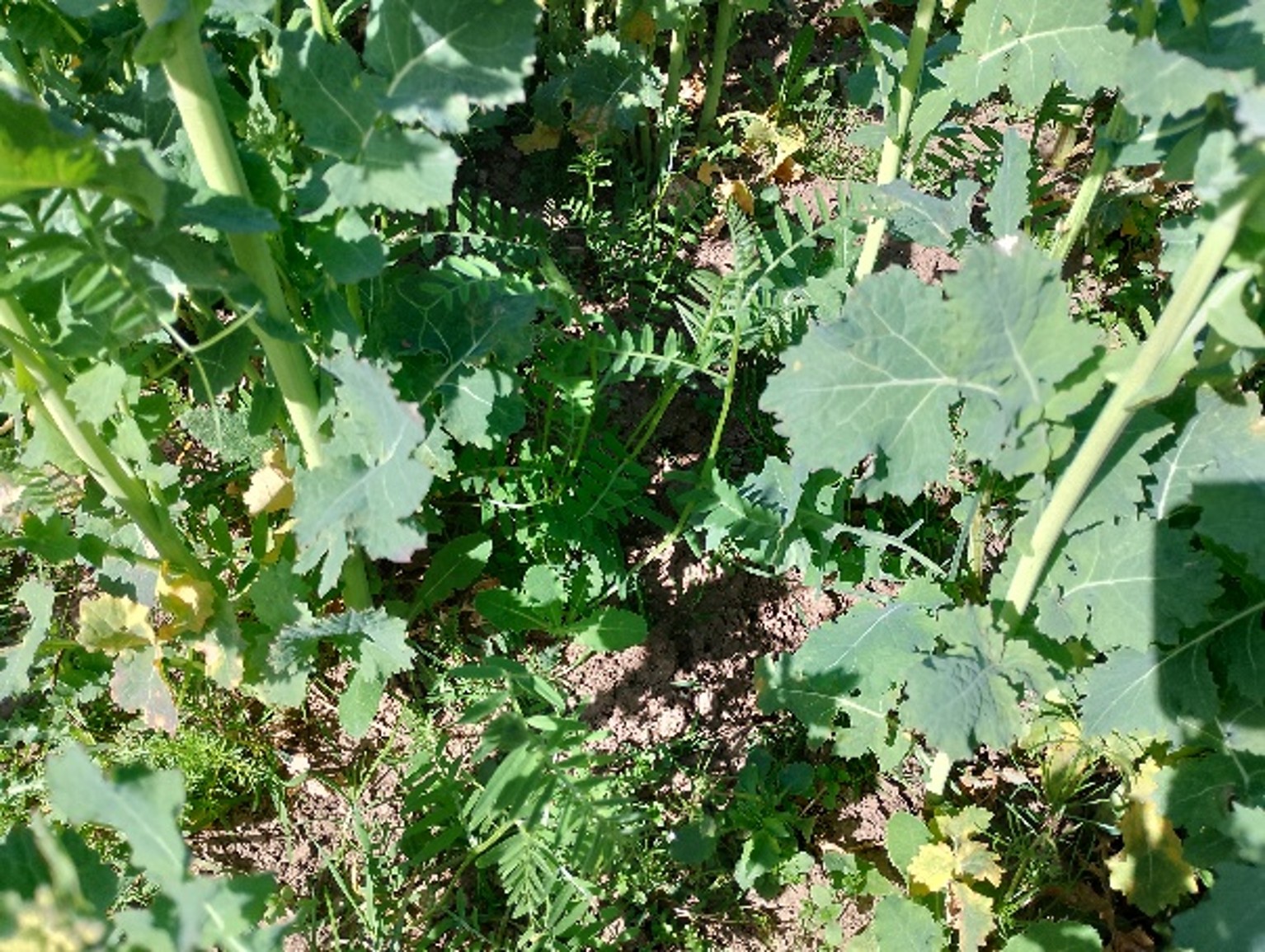
- Intercropping: Spring cereals, legumes such as fenugreek, clovers or vetch may help reduce pest damage and improve soil fertility through nitrogen fixation.
Consumer awareness of intercropping and organic production remains limited. Rapeseed oil also faces market perception challenges in a premium edible oil sector dominated by olive oil.
Despite five years of trading, the business has yet to become profitable. Establishing a premium food brand and accessing retail and food service markets proved more complex and resource-intensive than expected, making it difficult to build demand and secure long-term customers.
Contact
Updates from
the CICS 03:
IntercropVALUES Takes Centre Stage at Scottish Farm Advisory Service Event
IntercropVALUES and the benefits of intercropping were highlighted during a recent Farm Advisory Service (FAS) event hosted at Mains of Thornton, one of the farms participating in the Scottish Co-innovation Case Study (CICS #3). The event brought together around 25...
From barriers to identifying solutions: IntercropVALUES moves forward to promote intercropping
Intercropping, an agricultural practice that could help counterbalance the negative effects of agricultural specialisation by re-introducing crop diversity in fields, is currently facing strong resistance in Europe. Indeed, current European agricultural systems are...
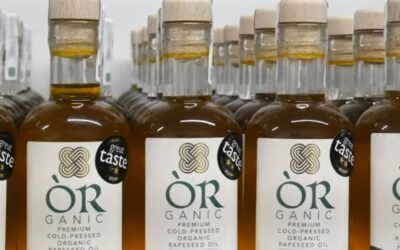
Marketing lessons from Scotland: launching of a product coming from intercropping
Product sales are essential for the survival of any food or drink business. Businesses can take different approaches, depending on the product, target market, and ambition. As part of the IntercropVALUES project, the Scottish Agricultural Organisation Society Ltd...
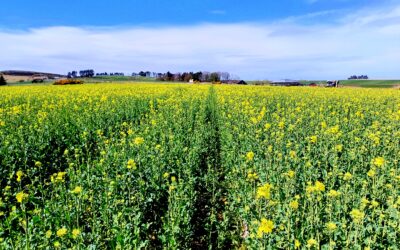
Intercropping to suppress weeds and mitigate pest damage: a snapshot of what partners have observed in the field
Another year another (inter-) crop. But the years are so variable. More unpredictable weather affects cultivations, crop development, and harvest. With all these variables, figuring out a blueprint to grow intercropped organic oilseed rape is tricky. A group of...
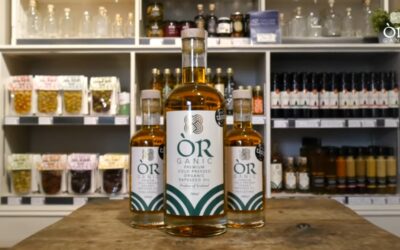
Scotland: lessons learned from the launch of a new culinary oil made with intercropped organic oilseed rape
Four years after the launch of ÒR-GANIC cold-pressed organic rapeseed oil, the directors of the company got together to reflect on progress. SAOS, an IntercropVALUES partner, facilitated the discussion. ÒR-GANIC is a Scottish high value culinary oil, made with...

Innovative intercroppers / OR crops co-operating VIDEO RELEASE
Intercropping – growing a few crops at the same time – is a great idea. If you grow barley and peas, for example, the barley gets drip-fed ‘free’ nitrogen from the bean crop, the pea gets a scaffold to support its growth, and pollinating insects get a food source from...

Introducing intercropVALUES to Scottish stakeholders
Our project partner SAOS | Scottish Agricultural Organisation Society Ltd published last year an article to introduce the project and intercropping to its members and wider audience in Scotland. The newsletter where it appears is printed and sent to approx. 680 co-op...

Stimulating the growth of the organic sector by developing intercropping practices
The 17th edition of the European Organic Congress, organized by IFOAM Organics Europe and Ecovalia, is currently taking place in Cordoba, Spain. On the picture above, Eduardo Cuoco (IFOAM Organics Europe) presents during the European Organic Congress 1st session on...

A summer to learn about intercropping
A summer to learn about intercropping Summer is starting and it is time to rest. The IntercropVALUES project started in November and the official kick-off took place at the end of that month, when all partners met in Montpellier to launch the activities and establish...
Check out the other 13 Co-innovation
Case Studies (CICS)
CICS 01 denmark
From Field to Flour: Wheat–Pea Intercropping Without Full Separation
CICS 02 sweden
LoBa – Local legumes, collaboration in
the entire value chain
CICS 03 uk
Or-Ganic / SCOCAN (SCottish Organic
CANola)
CICS 04 france
Supporting the integration of diverse intercropping systems into value chains in the South-West of France
CICS 05 germany
New product development including technology and adjustments/redefining regulations
CICS 06 greece
Intercropping for sustainable production of wheat and barley
CICS 07 reunion
New proven crop management strategies using service plants between the sugarcane rows
CICS 08 spain
Specific labelling to agri-food industry. Collective IPM actions and strategies
CICS 09 serbia
Creating prototype for local food value chain and operational solution for intercropping
CICS 10 france (west)
Local/regional values chains, up to national to bring out other groups in FNCUMA network
CICS 11 italy
Understanding and using the benefits of IC in complex farming systems and short value chains
CICS 12 mozambique
Promoting sustainable intercropping systems for agri-food value chain in Mozambique
CICS 13 switzerland
Enhancing food quality and developing value chains through organic wheat-faba bean intercropping
