
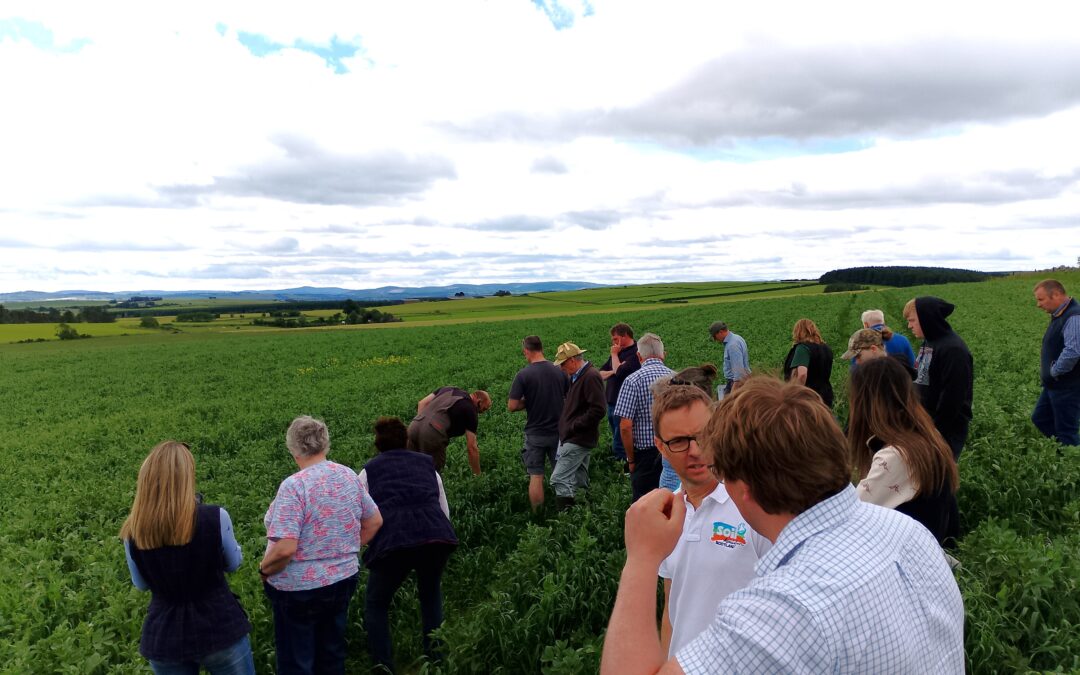
IntercropVALUES and the benefits of intercropping were highlighted during a recent Farm Advisory Service (FAS) event hosted at Mains of Thornton, one of the farms participating in the Scottish Co-innovation Case Study (CICS #3). The event brought together around 25 participants from a wide range of backgrounds, including organic and conventional farmers, farm advisors, organic certification representatives, and policy stakeholders.
The event provided several opportunities to showcase the work being carried out through the IntercropVALUES project and to discuss the practical application of intercropping systems on commercial farms.
Demonstrating Intercropping in Organic Oilseed Rape
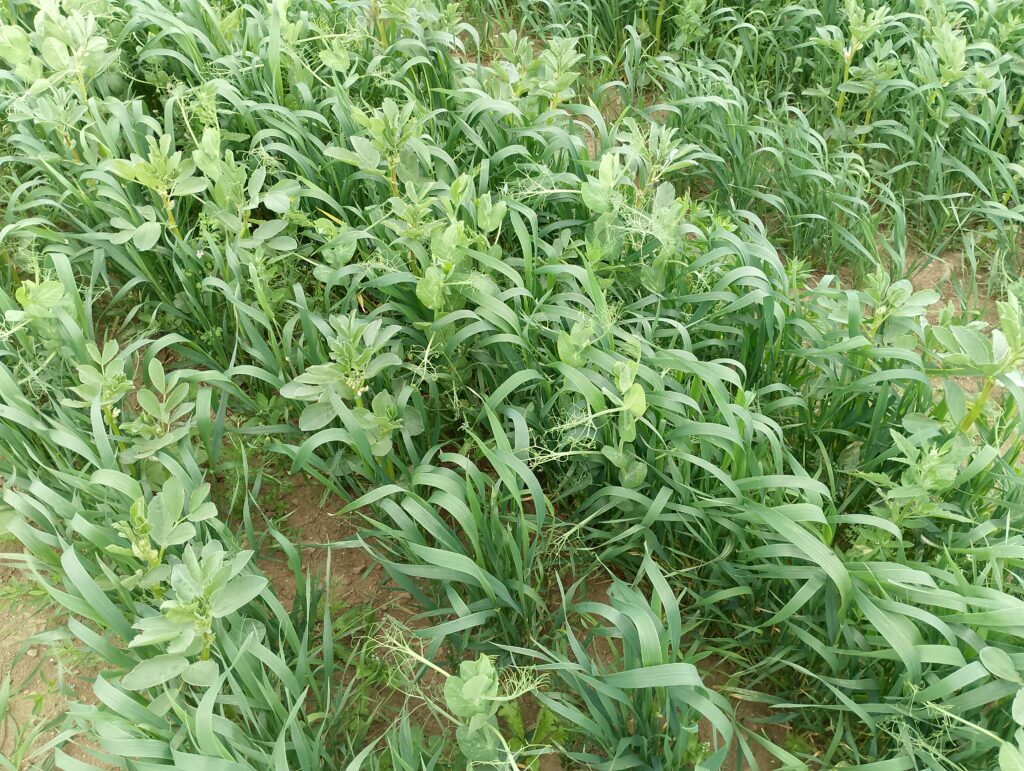
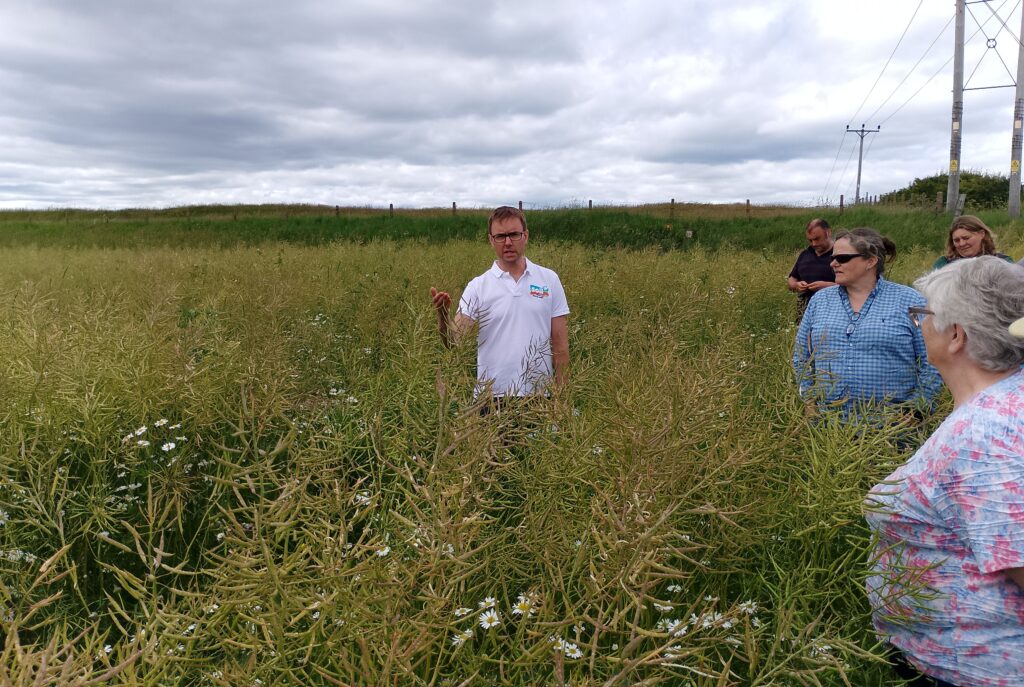
One of the main stops during the farm tour was a field of organic oilseed rape (OSR), which forms part of the Scottish CICS#3 activities. The crop had been established as an intercrop together with buckwheat, berseem clover, fenugreek, and vetch.
By the time of the visit, only the OSR and vetch remained, as winter conditions had naturally eliminated the other companion species. This outcome was anticipated as part of the original management strategy.
Each species in the intercrop mixture had a specific role:
- Buckwheat was included to improve phosphorus availability in the soil. Although the farm’s soils contain significant phosphorus reserves, much of it is not readily available to crops. Buckwheat is known for its strong phosphorus uptake capacity and can help mobilise this nutrient when used as a green manure.
- Berseem clover, fenugreek, and vetch were sown to help disrupt flea beetle activity during the early growth stages of the oilseed rape. Flea beetle can be a major pest of OSR in Scotland, and companion crops can help create a more complex environment that reduces pest pressure.
- As nitrogen-fixing legumes, these companion species also had the potential to contribute additional nitrogen to the crop.
The field provided a valuable real-world example of how intercropping can simultaneously support nutrient management, pest management, and overall crop resilience.
Exploring Additional Intercropping Systems
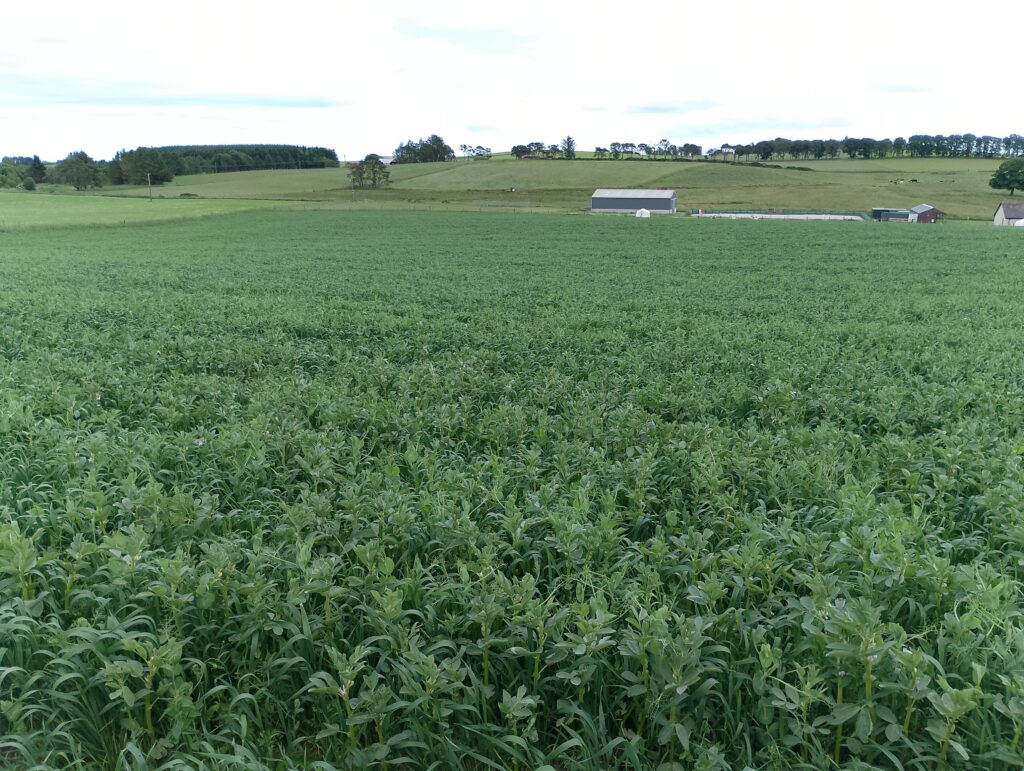
Participants also visited several other intercrops being grown on the farm, including combinations involving:
- Spring wheat
- Spring peas
- Spring beans
The farmer’s objective is to harvest these crops for grain later in the autumn, demonstrating how intercropping can be integrated into productive commercial farming systems.
Beyond the arable intercrops, visitors observed a number of multi-species swards being used for grazing and silage production. These discussions highlighted the growing interest in diversified cropping systems and their contribution to resilient farming businesses.
A particularly interesting topic was the use of undersown mixtures within cereal-pea intercrops aimed at producing high-protein livestock feed. This approach offers farmers significant flexibility. Depending on seasonal growing conditions and weather patterns, crops can either be harvested as grain or cut earlier as a wholecrop forage. At the same time, the undersown grassland becomes established, providing winter soil cover and creating opportunities for future silage cuts or grazing over subsequent seasons.
Policy Discussion and the Future of Intercropping
Policy considerations formed an important part of the discussions throughout the day. During the introduction to IntercropVALUES, participants explored how intercropping could be supported within Scotland’s evolving agricultural policy framework.
Among those contributing to the discussion was David MacKay, Policy Lead for Soil Association Scotland. His insights provided valuable updates on current policy developments related to intercropping and sustainable farming systems.
While Scottish agricultural policy is still evolving, there is increasing recognition of the role that intercropping can play in supporting environmental and economic objectives. Several organisations, including the Soil Association, are actively advocating for the inclusion of intercrops within future support mechanisms. Encouragingly, these efforts appear to be gaining attention within government discussions.
Showcasing Practical Innovation
The FAS event at Mains of Thornton demonstrated the value of bringing together farmers, advisors, certification bodies, and policy representatives to exchange knowledge and explore innovative farming practices. Through on-farm examples and open discussions, participants were able to see firsthand how intercropping can contribute to improved nutrient use, pest management, biodiversity, and farm resilience.
As IntercropVALUES continues to generate practical evidence and share experiences from across Europe, events such as this play a crucial role in raising awareness of the benefits and possibilities that intercropping offers for the future of sustainable agriculture.
All the pictures by Debs Roberts.