
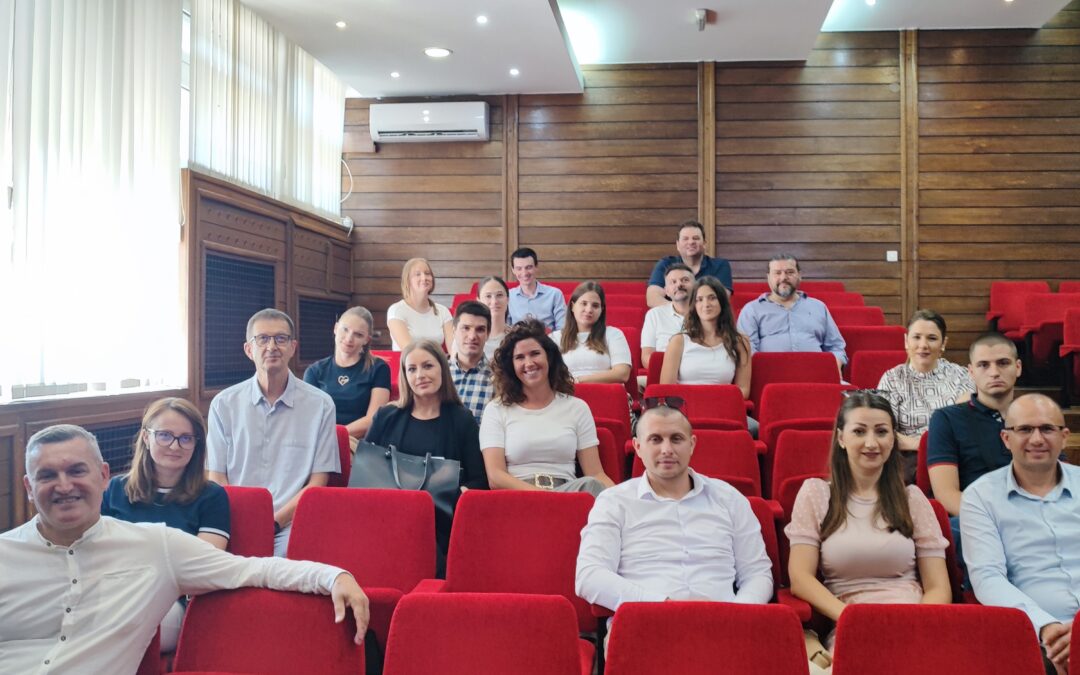
On 25 June 2026, the Faculty of Agriculture, University of Novi Sad, hosted the final stakeholder workshop of the Horizon Europe IntercropVALUES project entitled “Key Insights, Impact and Future Perspectives from the IntercropVALUES Project (2022–2026).” The event brought together researchers, farmers, value chain actors, representatives of institutions, and other stakeholders to present and discuss the achievements of the Serbian Co-Innovation Case Study (CICS#9) developed over the past three and a half years.
The workshop gathered approximately 30 participants who actively contributed through discussions, questions, and the exchange of experiences. It provided an excellent opportunity to reflect on the implementation of the project, share scientific and practical results, and identify future opportunities for scaling up intercropping systems within Serbian agri-food value chains.
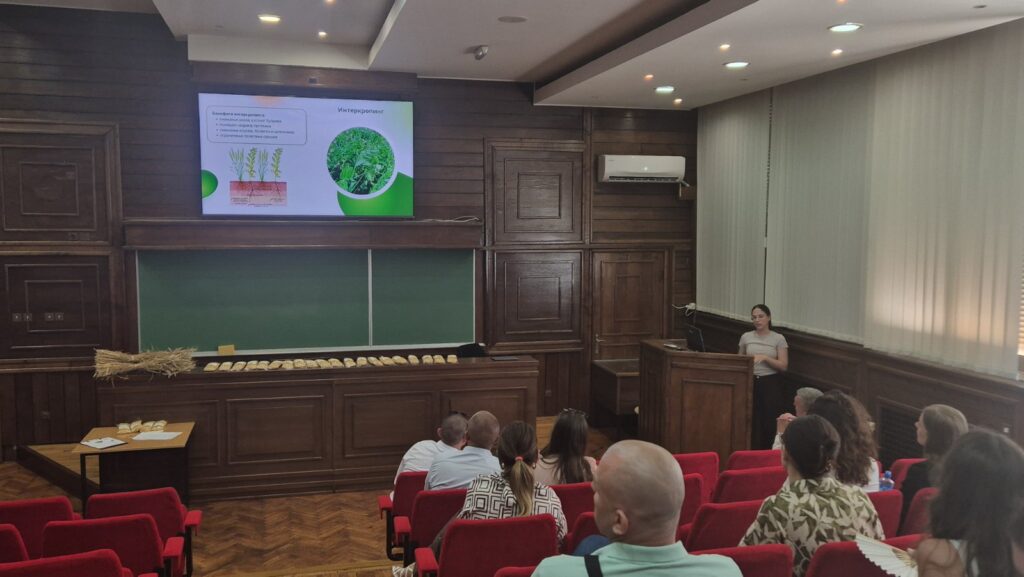
The programme started with an overview of the IntercropVALUES project and its main achievements, followed by a promotional video “Intercropping – From Seed to Fork.” The central presentation introduced the development and implementation of Co-Innovation Case Study #9 (CICS#9), highlighting the participatory approach used to establish cooperation among stakeholders involved in the intercropping value chain. Special attention was devoted to the experiences gained during the establishment of the CICS. Participants discussed the major technical, economic, organisational, market-related, and knowledge-related barriers limiting wider adoption of intercropping for human consumption. The workshop participants discuss limitations and practical solutions identified during project implementation. Among the most important challenges were the limited availability of suitable machinery, insufficient market development, lack of consumer awareness, and fragmented value chains.
The second part of the workshop showcased the scientific achievements of the Faculty of Agriculture research team. Presentations covered the results of field experiments on winter wheat–pea intercropping, the effects of intercropping on soil health, aboveground crop performance, the use of intercropping as green manure, and the outcomes of the international summer school dedicated to plant–soil interactions in intercropping systems. During the concluding discussion, participants emphasized that although intercropping represents one of the most promising diversification strategies for improving the sustainability and resilience of agricultural production in Serbia, its wider adoption still requires coordinated action across the entire agri-food value chain. The discussion highlighted the importance of strengthening cooperation among producers (farmers), processors, retailers, researchers, and consumers, while increasing public awareness of the environmental and nutritional benefits of intercropping products.
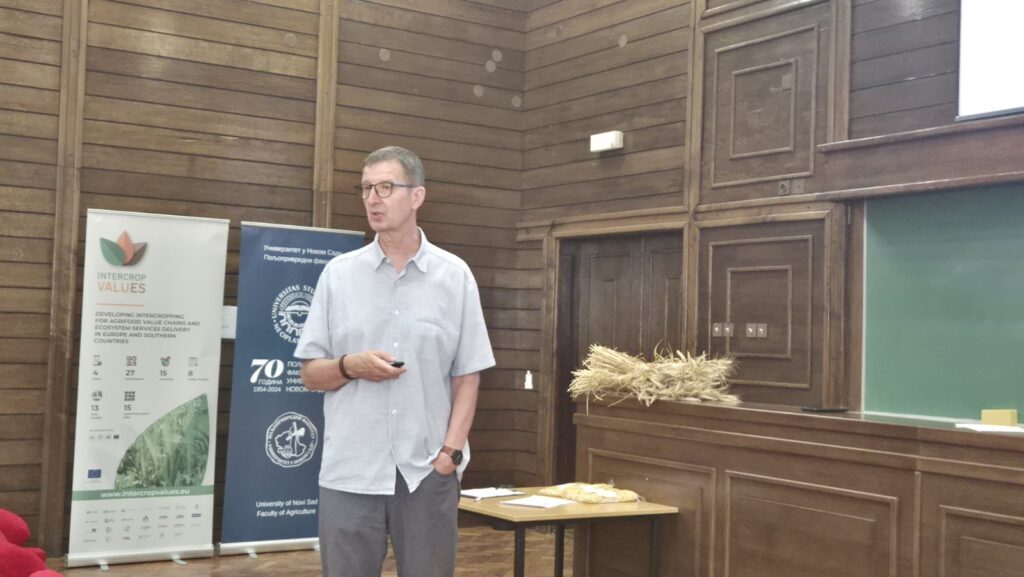
The workshop concluded that future activities should focus on improving knowledge exchange, adapting agricultural machinery and processing capacities, developing innovative intercropping-based food products, promoting short supply chains, and creating stronger market demand for products originating from diversified cropping systems.
The meeting successfully demonstrated the value of the co-innovation approach promoted by the IntercropVALUES project and strengthened the network of stakeholders committed to advancing sustainable, resilient, and multifunctional agri-food systems in Serbia.
This article was written by Srdjan Seremesic and the team at UNSFA