
In September 2025, IFOAM Organics Europe spent the yearly staff excursion in the Champagne region of France, visiting organic farms and tasting delicious champagne. The mission of IFOAM Organics Europe is to Make Europe More Organic. And for that, we stay inspired by those on the ground who drive the transformation of food and farming systems. During this exploration, we met a farmer growing lentils intercropped with spelt, rye, and other cereals. The lentils are a speciality in the region, 98% grown organically and always in intercropping.
Lentillons from Champagne: intercropping tradition with cereals
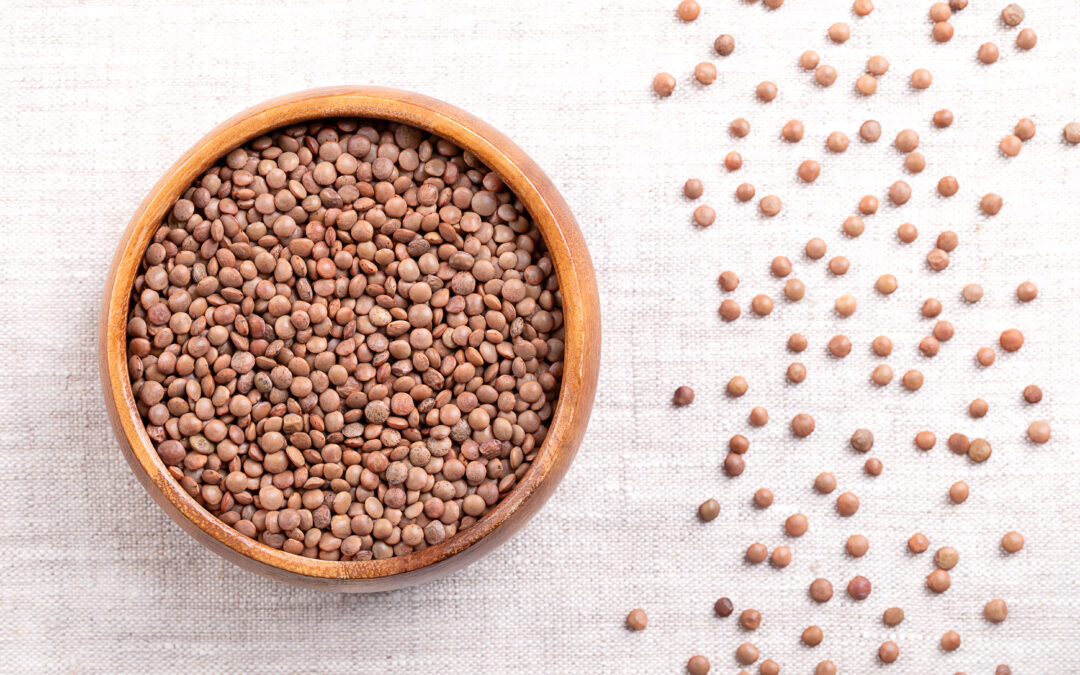
The lentillon champenois is a small, pinkish lentil grown exclusively in the chalky soils of the Champagne region. Known for its delicate skin and subtle, slightly sweet flavour, it is part of a long-standing local tradition.
Centuries‑old heritage, loss, and comeback
This legume has ancient roots in the Champagne region: it was already appreciated in the 18th century. Over time, especially in the 19th and early 20th centuries, cultivation declined sharply and the lentillon risked being forgotten. In 1983, René Devalance and other farmers relaunched its cultivation.
Intercropping with rye
The lentillon is traditionally sown in autumn together with a cereal (typically rye), which serves as a natural support, so the fragile lentil plants stay upright. The two are harvested together in July, then separated by sorting. The crop is low input: little fertiliser, no heavy irrigation, adapted to poor, well‑drained soils.
A niche but growing sector
Today, around 20 farmers grow lentillons on approximately 90 hectares, mostly using organic practices. Yields vary but average around 700–800 kg per hectare. Interest in this crop is growing due to its quality, sustainability, and local identity.
IGP: towards geographical protection
In 2024, the production rules for “Lentillon champenois”, including the intercropping practice, were defined and officially approved. They will now be submitted to the European Union for registration as a Protected Geographical Indication (IGP). This status will ensure its origin, safeguard traditional practices, and increase the crop’s value.
More information (in French): https://lentillon-champenois.fr/histoire/
This article was written by Claire Morelle (IFOAM EU)