
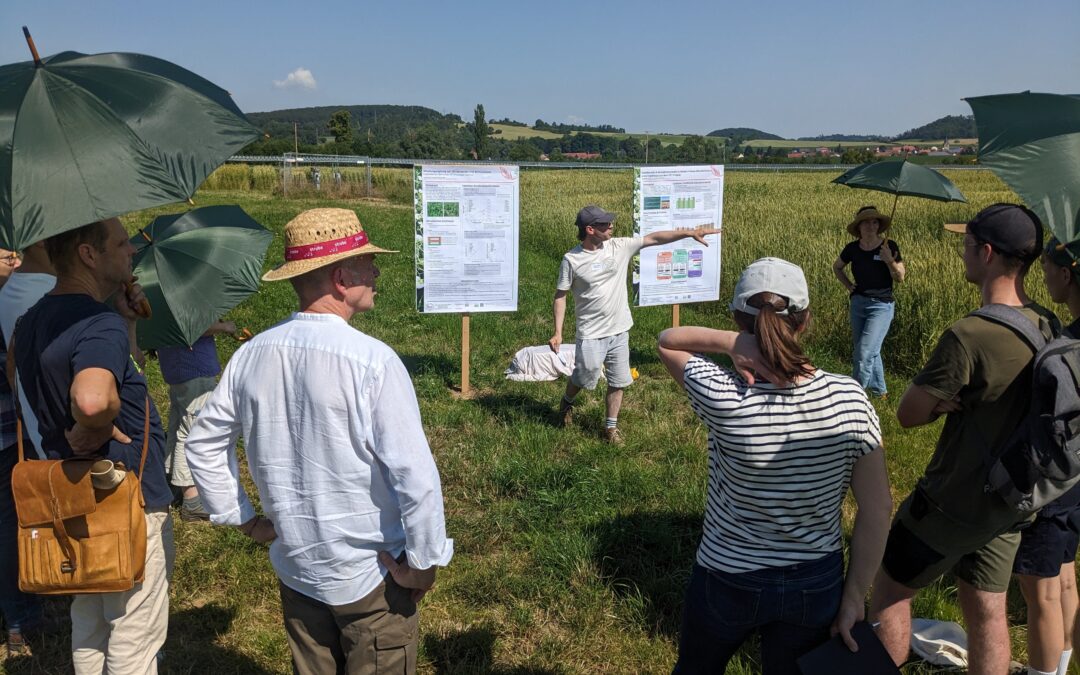
Around 200 participants gathered on 25 June 2026 at the Neu Eichenberg Teaching and Experimental Farm of the University of Kassel, Germany, for the event “Bringing innovation to the grassroots – Greater diversity, greater value”. The event brought together a diverse audience, including students, farmers, millers, bakers, consultants, researchers and representatives from the political sphere, with two representatives of the Green Party also attending.
The event provided an opportunity to exchange knowledge and experiences on how greater biodiversity in arable farming can contribute to more resilient, efficient and sustainable agricultural systems, while helping bring research and innovation closer to farming practice.
Exploring crop diversity in the field
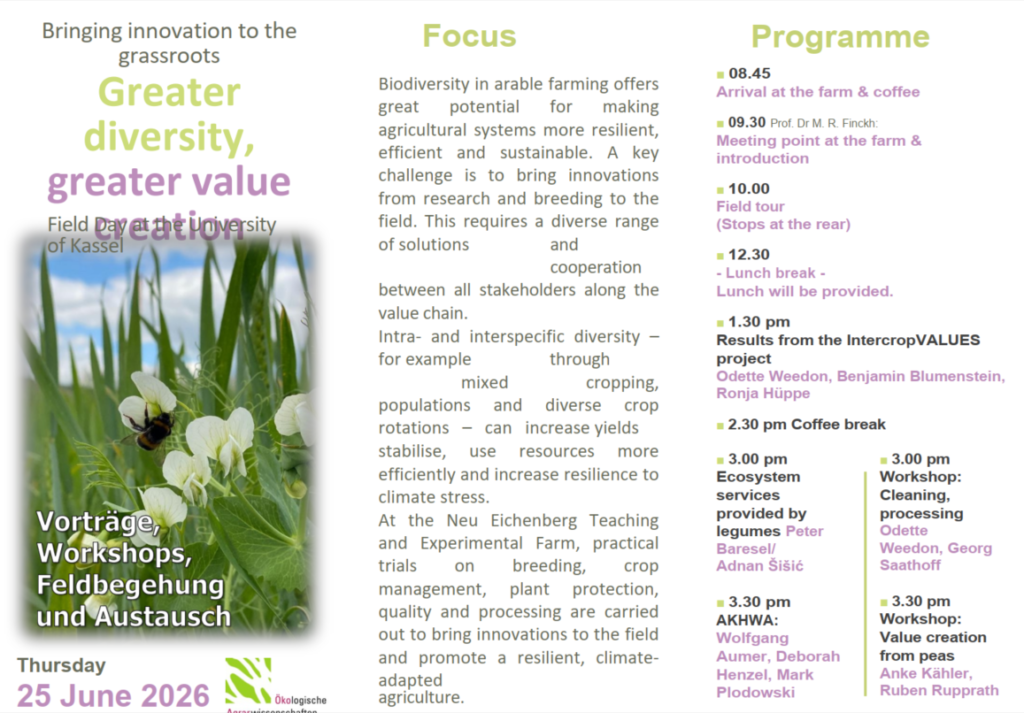
The programme began with an introduction by Prof. Dr M. R. Finckh, followed by a field tour showcasing different research activities and practical approaches to crop diversity.
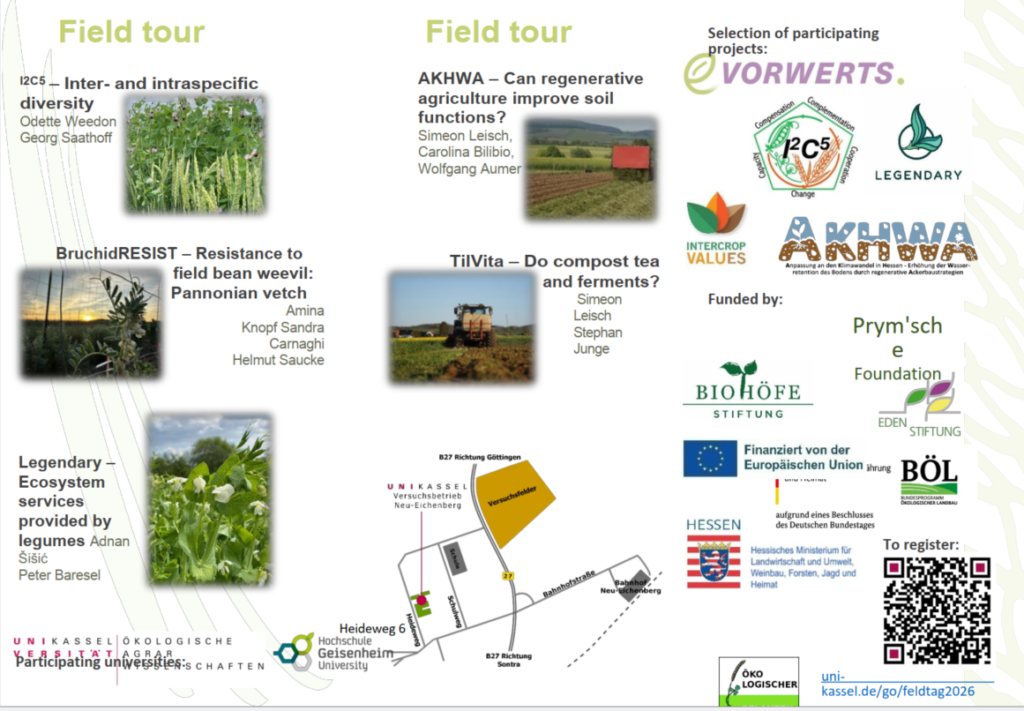
Participants visited trials addressing a range of topics, including inter- and intraspecific diversity, the ecosystem services provided by legumes, resistance to field bean weevil in Pannonian vetch, regenerative agriculture and soil functions, and the use of compost teas and ferments.
These activities illustrated how mixed cropping, diverse crop populations and crop rotations can contribute to stabilising yields, improving resource-use efficiency and increasing the resilience of agricultural systems to climate stress.
IntercropVALUES presents project results
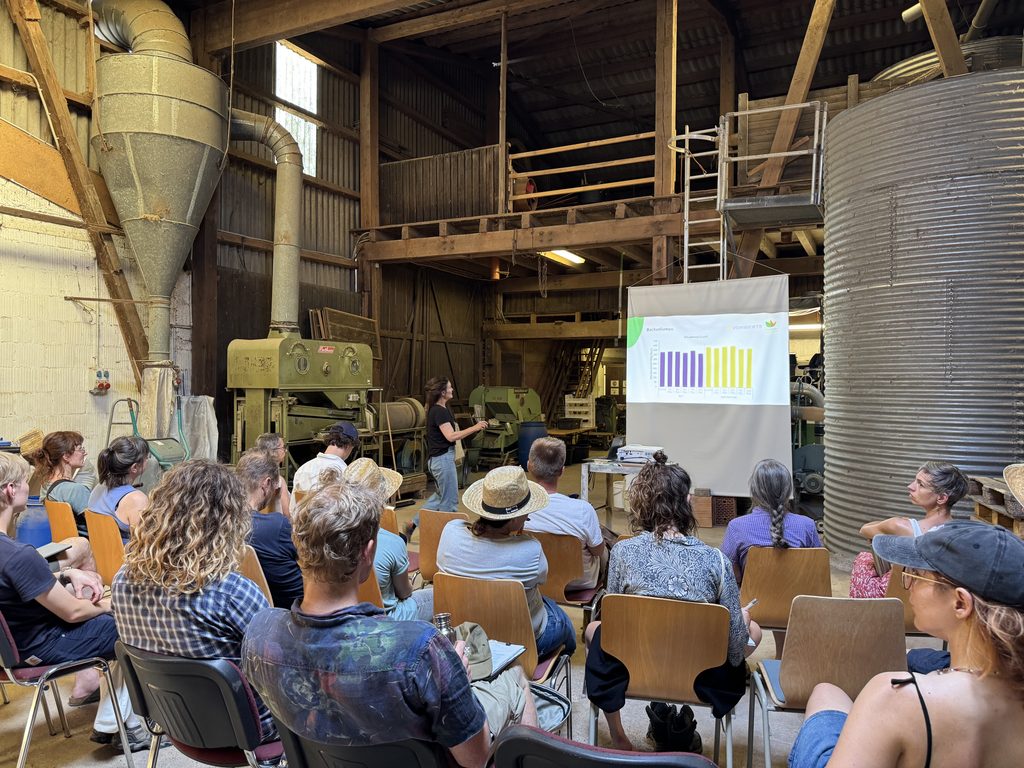
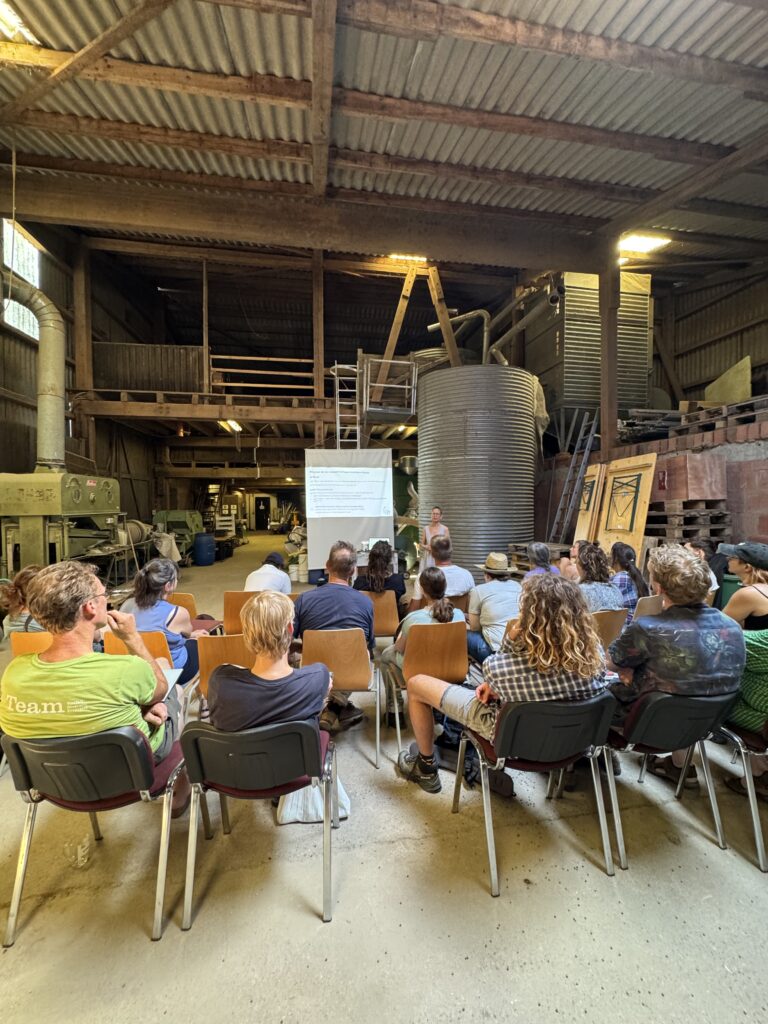
In the afternoon, Odette Weedon, Benjamin Blumenstein and Ronja Hüppe presented results from the IntercropVALUES project, highlighting the potential of intercropping and crop diversity to support more sustainable agricultural practices.
The presentation was followed by practical workshops, including a session on cleaning and processing, led by Odette Weedon and Georg Saathoff, which addressed an important aspect of making intercrops viable: the handling and separation of mixed harvested grains.
Another workshop focused on value creation from peas, exploring opportunities to develop value chains and make better use of legume crops.
The programme also included presentations on the ecosystem services provided by legumes and the AKHWA project, further broadening the discussion on the benefits of crop diversification and regenerative agriculture.
Connecting research, farming and the value chain
With around 200 attendees from different professional backgrounds, the event offered a valuable setting for dialogue between research and practice. Bringing together stakeholders from across the agricultural value chain — from farmers and processors to researchers, consultants and political representatives — helped highlight both the opportunities and the practical challenges involved in adopting more diverse cropping systems.
The event reinforced the importance of collaboration in translating research findings into solutions that can be applied on farms and throughout the food value chain. By combining field demonstrations, scientific presentations and hands-on workshops, the CICS05 final event in Germany showcased how greater crop diversity can create greater value for more resilient and sustainable agriculture.