
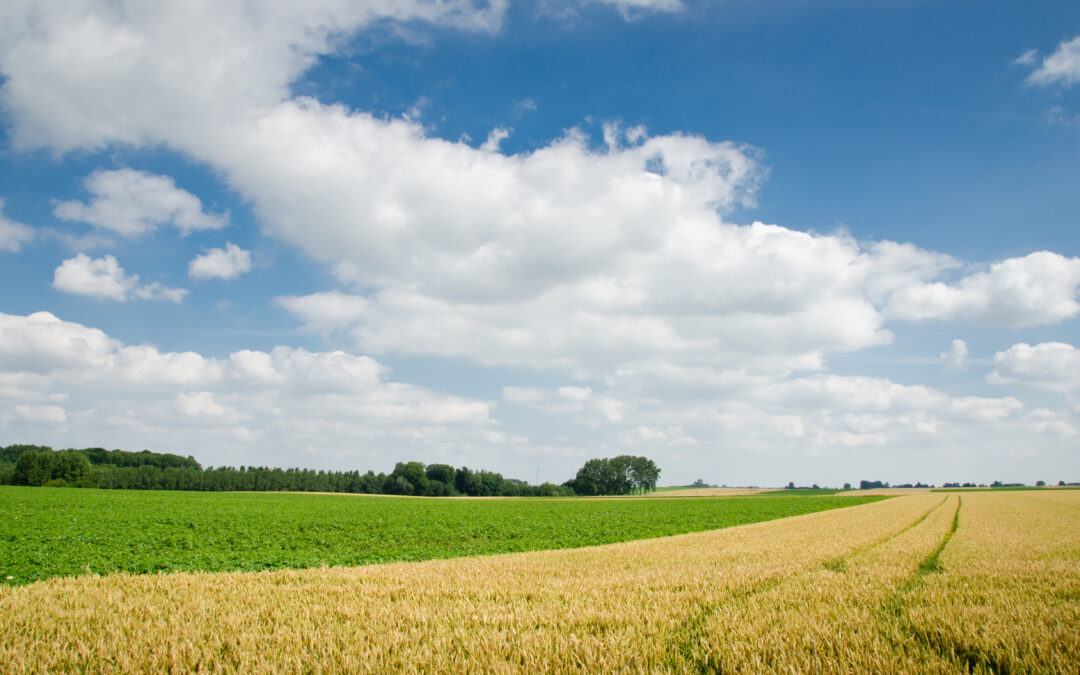
Intercropping is gradually gaining attention in Flanders. Yet, in a feedback meeting organised by the Flemish Agency of Agriculture and Fisheries discussing what can be learned from two years implementing subsidies for legumes and intercrops, it became clear that the total cultivated area remains limited. One reason is that the required seeding density for certain crops, such as fodder peas, is relatively high. At present, intercropping is mainly applied in organic farming systems, where it is often used for whole crop silage or, to a lesser extent, for dry harvest. However, the average protein content of these intercrops remains around ten percent, which raises doubts about their economic competitiveness compared to sole crops.
Although the ecological advantages are clear, farmers face numerous practical and economic challenges. Many fear lower yields compared to single cropping, while the long-term benefits for soil fertility and biodiversity are often underappreciated. Lower protein content is another concern, as are wildlife damage and the limited availability of efficient machinery. The quality and stability of seed mixtures are not always guaranteed. Another issue is that variety trials are almost exclusively conducted on sole crops, leaving a lack of reliable data on the performance of intercropping systems. Variable levels of anti-nutritional factors and the presence of allergens can further complicate processing. On-farm management also poses difficulties, since intercropping requires new routines and expertise — such as determining the optimal sowing and harvest times and managing crops with different growth rates. The limited availability of approved plant protection products for mixed crops further increases the perceived risk. Adding to the complexity, the CAP definitions of “main crop” can create uncertainty about compliance.
As a result, many farmers remain risk-averse. Without clear demonstrations or success stories showing that intercropping can be profitable, adoption remains slow. However, several promising directions are being discussed for the next CAP, aiming to give intercropping a stronger position within Flemish agriculture. One major focus is improved communication. Farmers need clearer information about available subsidies and the possibilities of combining them with eco-schemes. Technological support is another key factor. Through the Flemish Agricultural Investment Fund (VLIF), more targeted support could be offered to farmers investing in suitable seeding and harvesting machinery.
Financial incentives remain crucial. The current subsidy of €600 per hectare is often insufficient to cover the risks associated with intercropping. Moreover, the payment does not always end up with the farmer, as some buyers factor it into their purchase prices. To address this, alternative financing models are being explored. Transitional support could help farmers through the learning phase, similar to what exists for organic farming. Blended finance — combining public funding with contributions from companies and foundations — could also spread risks more fairly. Major players could offer additional premiums on top of public support. Another promising approach involves long-term contracts between farmers and buyers, ensuring stable prices and outlets. Within the CAP, a “top-up” mechanism could reward farmers who grow intercrops at least three times within a five- or six-year period.
Finally, strengthening value chain collaboration will be essential. In Germany, so-called “chain brokers” or coordinators already play a key role in connecting farmers, processors, and buyers. In Belgium, initiatives such as Farm For Good are demonstrating how similar cooperation models can work, helping to spread risks and align incentives across the chain.
This article was written by Erik Mathijs (KULeuven)