
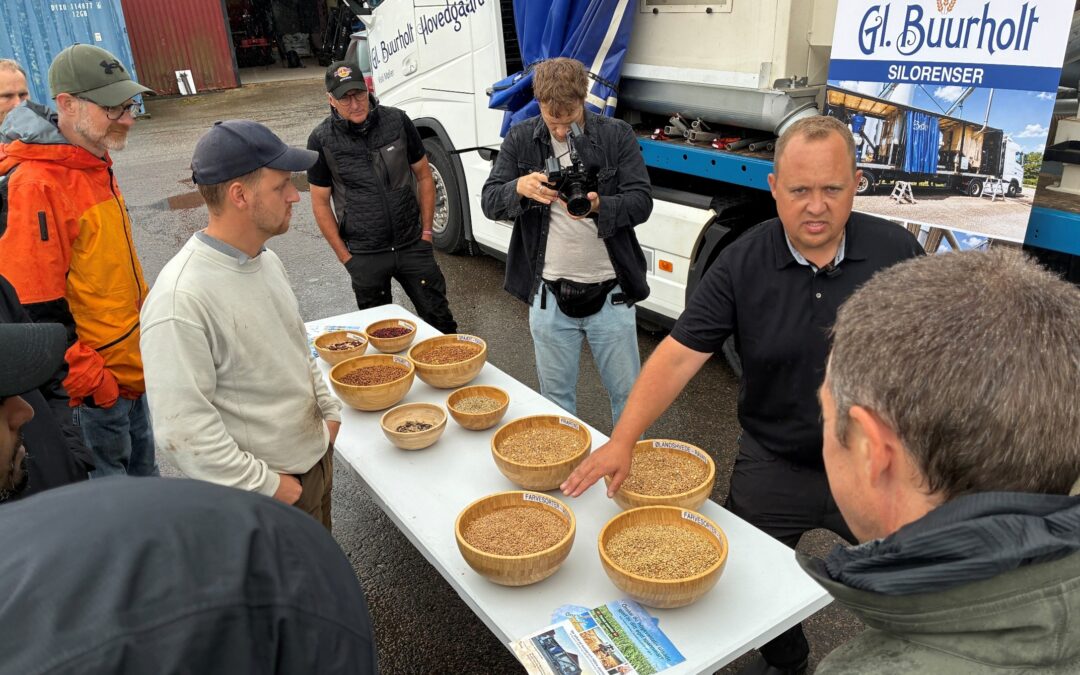
On 6 July 2026, IntercropVALUES held an event at Lönnstorp Field Research Station (SLU Alnarp), in Lomma, Sweden, bringing together around ten participants, mainly researchers and students, as well as a journalist. The event offered an opportunity to explore intercropping both in the field and from a practical perspective, with a particular focus on its agronomic and environmental benefits and the challenges associated with post-harvest grain separation.
The programme included a field walk showcasing different examples of intercropping in field experiments, followed by a demonstration of a mobile grain sorting and cleaning facility.
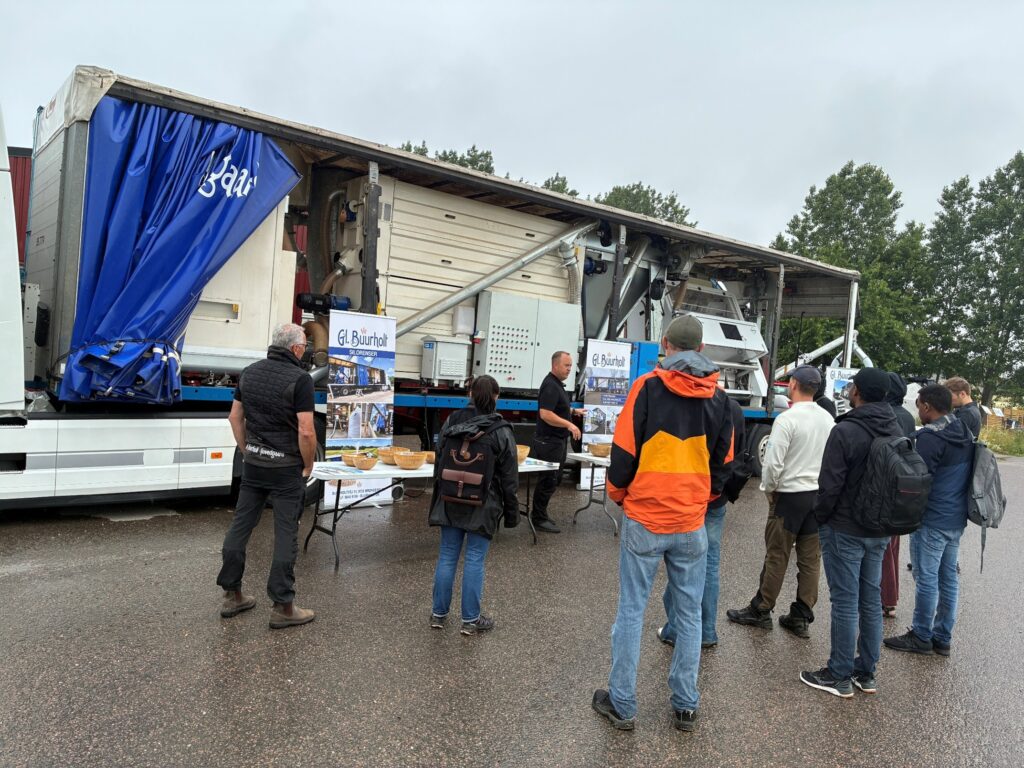
Mobile Grain sorting demonstration
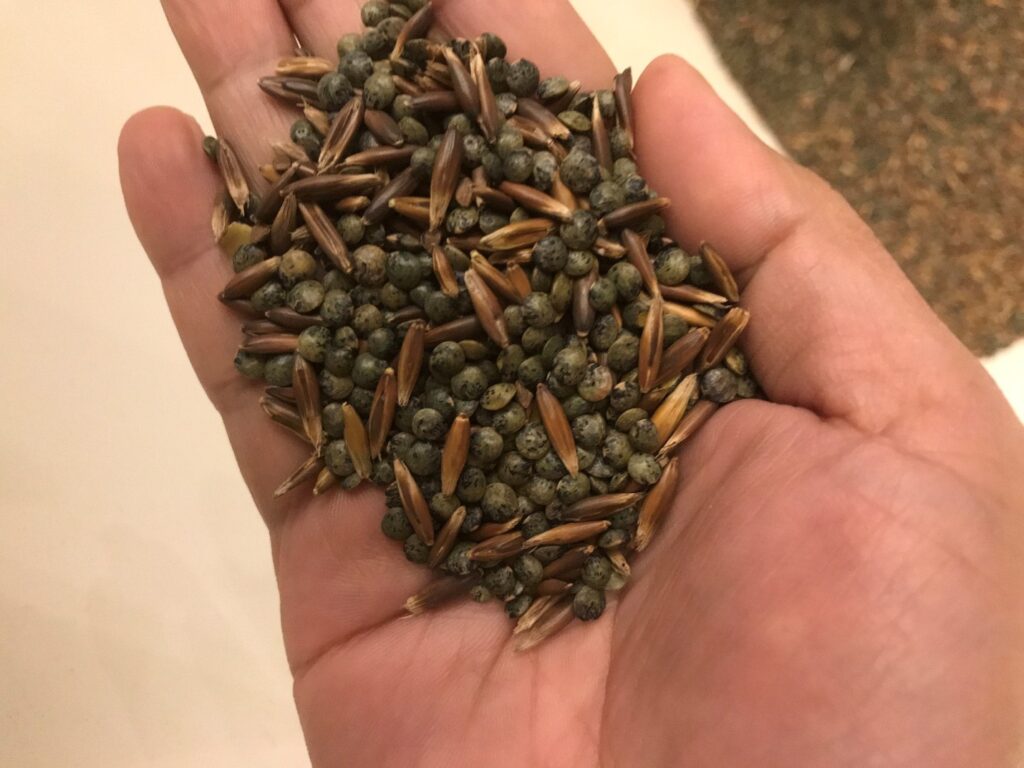
Oat-lentil mixture
Why grow two or more crops together?
Intercropping involves growing two or more crops in the same field. As illustrated during the event and in the video recorded on the occasion, combining cereals and legumes can bring several benefits.
Legumes such as peas, lupin and faba beans can fix atmospheric nitrogen and make it available to companion cereal crops, including wheat, barley and oats. This can reduce the need for mineral fertilisers. Crop mixtures can also help suppress weeds, an important challenge in organic farming, while improving crop stability. For example, cereals provide physical support for peas, helping prevent them from lodging and making harvesting easier.
Furthermore, greater crop diversity can support biodiversity and beneficial organisms, contributing to more sustainable agricultural systems and improved resource-use efficiency.
Overcoming the challenge of grain separation
One of the main practical challenges of intercropping is separating the different grain species after harvesting. The event addressed this issue through a live demonstration of a mobile grain sorting and cleaning facility.
The process combines several stages: first, the mixed grain passes through a screen cleaner; next, two indented cylinders separate shorter and longer grains. Finally, an optical sorter removes the remaining unwanted grains based on their colour, bringing the final product close to 100% purity.
The equipment can be configured with a specific “recipe” for each crop mixture, such as faba beans and peas or peas and oats. Depending on the mixture and the sorting requirements, the facility can process approximately 5–6 tonnes of barley per hour, and 12–14 tonnes per hour in other applications.
From research to practical solutions
The event demonstrated how intercropping can contribute to more efficient use of resources and reduced environmental impacts, while also highlighting the importance of suitable post-harvest technologies.
The mobile sorting facility provided a practical example of how the challenge of separating mixed grain can be addressed, allowing farmers to obtain high-quality, marketable products from intercrops.
By combining field observations, scientific insights and a machinery demonstration, the event helped connect research findings with practical solutions for the wider adoption of intercropping.