
After four years of research across Europe and beyond, the project highlights both the potential of growing crops together and the practical changes needed to make the approach more widely adopted.
Wageningen, Netherlands – September 23-25, 2026
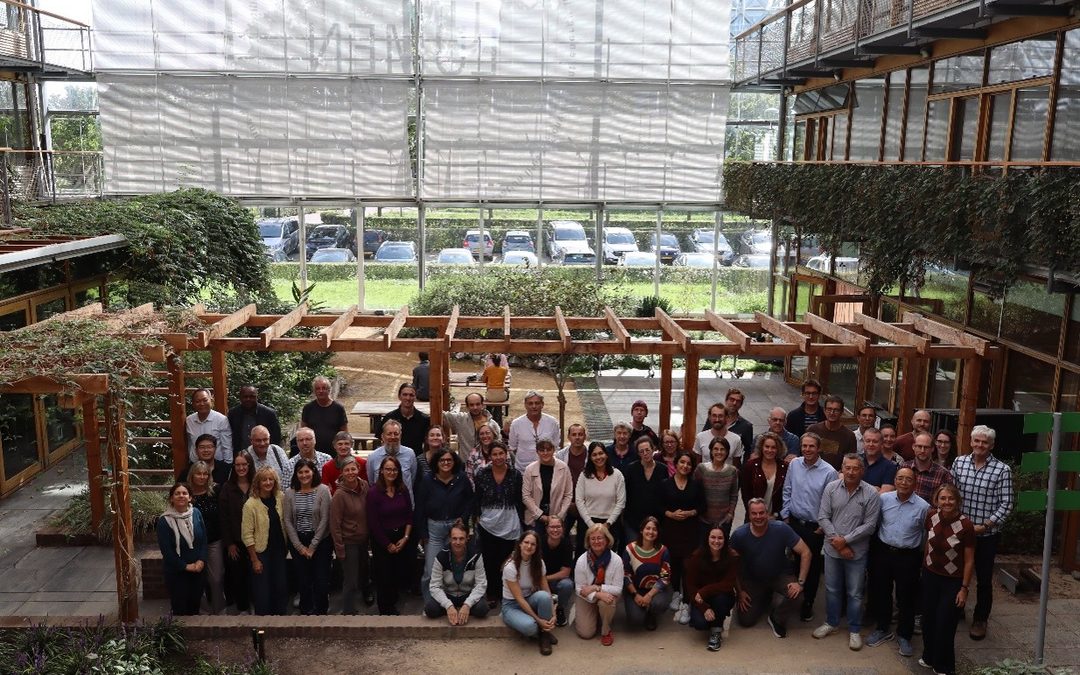
How can growing two or more crops together help build more sustainable farming systems? And what needs to change for farmers and food businesses to make this approach work in practice? These questions were at the centre of the final consortium meeting of IntercropVALUES, held at Wageningen University & Research from 23 to 25 September.
As the European research project approaches its conclusion in October 2026, partners gathered to review four years of research, share lessons from farming and food production, and consider how the knowledge and tools developed can continue to support the agricultural sector.
Intercropping involves growing different crops together in the same field and offers an alternative to conventional single-crop farming systems. By combining crops with different characteristics, farmers may be able to make better use of natural resources and support more diverse agricultural systems. However, the benefits are not automatic: results depend on the crops selected, farming practices, weather and local conditions.
From field experiments to practical farming solutions
The meeting brought together findings on crop productivity, nitrogen use, greenhouse gas emissions, interactions between plants and the wider environmental effects of farming. Discussions highlighted the importance of understanding which crop combinations work best under particular conditions, rather than assuming that one approach will suit every farm.
The research also looked beyond individual growing seasons to consider how intercropping fits into wider farming systems. This broader perspective is important when assessing its potential contribution to agricultural resilience and sustainability, alongside the practical demands placed on farmers.
Growing different crops together also raises questions about what happens after harvest. Mixed grains may offer opportunities for food innovation, including new flour blends and products, but processing them can require adjustments to established methods. Separating different grains, for example, can take additional time and energy, while machinery designed for single crops may not always be suitable for mixtures.
Experiences shared during the meeting showed how farmers and cooperatives have adapted equipment and developed approaches to cleaning and sorting harvested crops. These examples underline the importance of practical solutions, suitable machinery and stronger connections between farmers, processors and other businesses across the food supply chain.
Keeping research useful beyond the project
A central theme of the second day was how to make the project’s findings accessible and useful to different audiences. Discussions and workshops explored how the knowledge gathered could be communicated to farmers, agricultural advisers, educators, researchers, food businesses, consumers and policymakers.
Partners also considered how to maintain the relationships developed through the project’s farming case studies and how to make research data and practical tools available for future use. Continuing exchanges between researchers and people working across the agricultural and food sectors will be important to build on the experience gained.
The final day turned to policy recommendations and ways to put the results into practice. Topics included the future of the Common Agricultural Policy, organic farming, protein-crop value chains, investment in machinery and the exchange of knowledge between research and farming communities.
These discussions reflected a key lesson from IntercropVALUES: wider adoption of intercropping depends on more than evidence from field trials. Farmers also need workable production methods, appropriate equipment, reliable routes to market and an enabling policy environment. Food processors and other businesses must be able to handle and use mixed crops, while advisers and policymakers can help connect research with decisions made on the ground.
A foundation for the next stage of intercropping
The Wageningen meeting marked an important milestone in the final phase of IntercropVALUES. While the project will end in October 2026, its findings, practical resources and collaborations provide a basis for further work on crop diversification.
By bringing together agricultural research and the experiences of farmers and other food-chain actors, the project has examined intercropping as a whole-system challenge, from crop selection and field management to processing, markets and policy.
The next step is to ensure that this knowledge reaches the people who can use it. Continuing collaboration between research, farming, industry and policymakers will be essential to turn lessons from the project into practical opportunities for more diverse and sustainable agricultural systems.
About IntercropVALUES
IntercropVALUES is a European research project investigating how intercropping can contribute to productive, resilient, sustainable and economically viable farming systems. Bringing together research organisations and other stakeholders, the project has explored crop performance, environmental impacts, food processing, market opportunities and the barriers that can limit adoption. Funded by the European Union’s Horizon Europe programme, the project brings together 27 participating organisations from 15 countries.